Hellaro (2019)
By Anju
Language: Gujarati
Director: Abhishek Shah
Cast: Shraddha Dangar, Jayesh More, Kaushambi Bhatt, Brinda Trivedi, Shachi Joshi, Niilam Panchal, Dhenisha Ghumra, Tejal Panchasara, Kishan Gadhavi
As they say art needs no words or language, so do feelings and emotions. Being a non Gujarati, I saw this national award winning film through a source that didn’t have subtitles. That didn’t matter. And what a visual treat it was. Aided by a tremendous ensemble cast, craftful first time director, Abhishek Shah’s Hellaro in one word, is a jubilant film. In what the title translates to “outburst”, it’s truly an explosion of virtues of patriarchy.
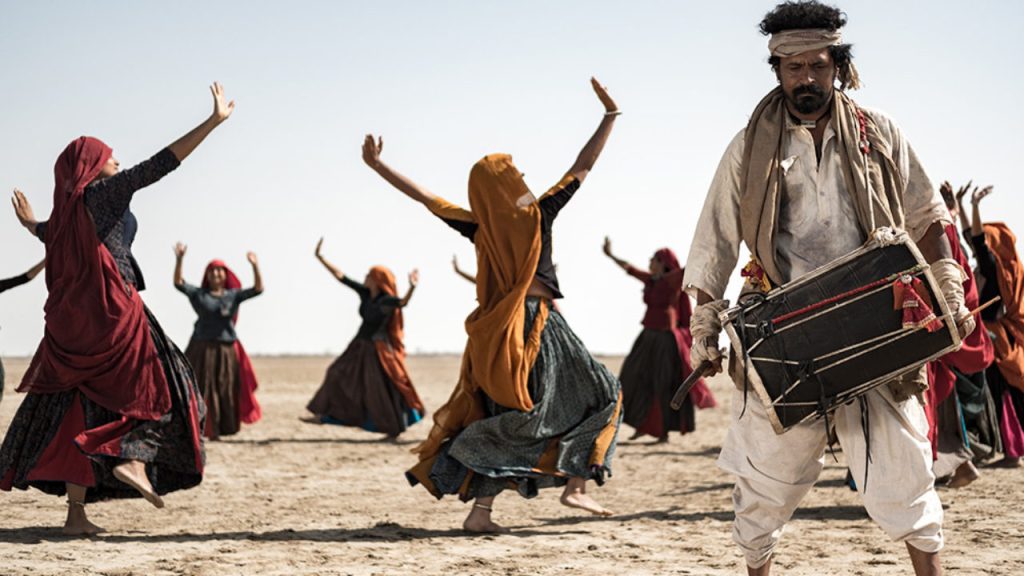
The film is set in 1970s Rann of Kutch, the set entirely created, live villagers with deep patriarchal values ensconced in them. The film opens with the villagers assembled at the village centre in Samarpur with the Mukhi (Shailesh Prajapati) following the radio announcement of Emergency being declared by Prime Minister, Indira Gandhi, assisted by the jovial village literate Bhaglo (Maulik Nayak). The village is barren, ridden with drought, cursed with no rain in years. Manjhri (Shraddha Dangar), a newly wedded bride, slightly educated, enters the village. She’s a free spirited, defying customs kind of girl, in complete contrast to other women in the village. The women are subdued and kept at homes, only have other women in company when they set out to fetch water in the mornings with their brass pots. That is their only time of communion with fellow women, whereas the men hang out openly in public areas even discussing women in movies. On one of their mornings, they find a man fallen unconscious in a vast desert where they go to fetch water. When they are about to just wade across, he wakes up and asks for water, only to be reciprocated by Manjhri, as others don’t want to be involved stemming from their fear of rebuttal. He is Mulji (Jayesh More), a low caste from the other village, having lost his wife and daughter in fire, walked across and passed out here. He develops an instinctive bond with the women folk, who have a “release” of their pent up suppression through the dhol of Mulji, that forms their morning routine.
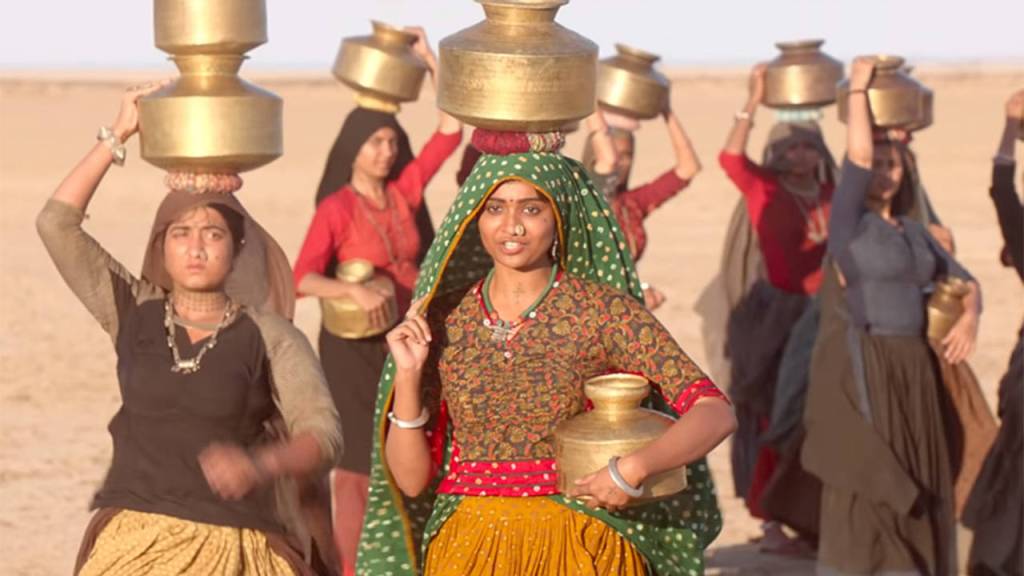
Abhishek Shah’s craft doesn’t feel like a first time director’s work. The film gets full marks wrt all the departments. Right from the sets, colour, costumes, sound design, music, choreography, cinematography, production design to screenplay and performances, everything is well rounded craft. It would be unfair to single out a performance, as all are perfectly cast and have played their parts being the part. That is the reason the 13 female actresses were felicitated with the Special Jury awards at the 66th National Film Awards along with Best Feature Film award. It was also a strong contender from India in the International Feature Film category at the coming 2021 Oscars.
Sameer and Arsh Tanna who choreographed numbers from Sanjay Leela Bhansali’s films – Dholi Taro, Lahu Munh Lag Gaya, and Nagada Sang Dhol, have choreographed elaborate and fantastic folksy numbers in this film given by Mehul Surti. The men, solely, play Garba at night to appease the goddess for rain, while women play Garba in the mornings with their colorful Bandini printed costumes, away from the gaze of men, bearing their hearts and souls out in abandon, to the soulful dhol by Mulji. Niki Joshi has done a wonderful job with costume design.
As in the end of the film it says it’s based on folklore, Garba is used as a medium of release and retaliation. When the women indulge in Garba with their vibrant costumes in the expansive and breathtaking Rann of Kutch, it may look like they are dancing for enjoyment, but it is their only form of free expression of their inner angst and turmoil. It is through which they find their freedom. It’s an irony that the entire village and men folk worship “Mavadi” means mother or goddess, whereas they don’t have reverence for the same women in their village. In a disturbing scene, when the men come to know of their women playing Garba with Mulji near the place where they go to fetch water, they are beaten and bruised badly. Buttressed by generations old beliefs – religious, economic and social, the men reduce the women to restricted confines of their homes, whereby the latter just glance over the village happenings through their tiny window panes. Even though we have come so far in this tech world, this still happens in many rural parts and in other forms and manner in cities too, till date. Women aren’t given an agency and not solicited in any decision making process in the affairs of the home and state. The final act is so powerful and mesmerizing, which was what I exactly anticipated and wished for. It kind of reminded me of the iconic Hindi film Mirch Masala. In the moment of catharsis, the entire sequence is choreographed in visual grandeur with the set pieces coming together beautifully in unison. Indeed, it feels like erupting in “outburst” of joy when the film ends.
Stars: ****
 My thoughts